
Nutrition and Diet Tips for Nurses: Practical Advice for a Busy Schedule
As a nurse, your demanding job often requires long hours, unpredictable shifts, and constant physical and mental exertion. While caring for others, it’s easy to overlook your own nutritional needs. However, a healthy diet is key to staying energized and focused on the job. This post will share simple nutrition tips for nurses that can easily fit into busy schedules.
Practical Nutrition for Nurses: Balancing Your Diet
Importance of Balanced Nutrition for Nurses
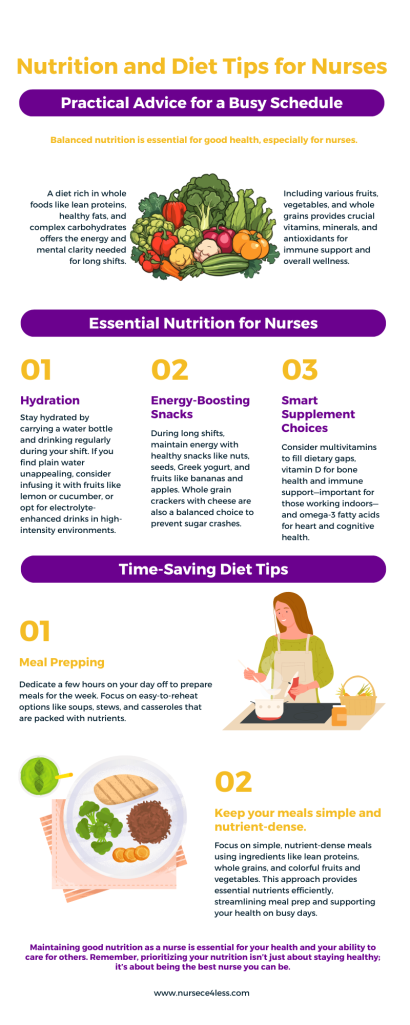
Balanced nutrition is the cornerstone of good health, and for nurses, it’s particularly crucial. A diet rich in whole foods, including lean proteins, healthy fats, and complex carbohydrates, provides the sustained energy and mental clarity needed during long shifts. Incorporating a variety of fruits, vegetables, and whole grains ensures you get the vitamins, minerals, and antioxidants that are vital for your immune system and overall health.
For those nurses pursuing an MSN in Nutrition or those who have transitioned to becoming a Certified Nurse Nutritionist, understanding the importance of balanced nutrition becomes even more relevant. The knowledge gained from studies like Nutritional Foundations and Clinical Applications: A Nursing Approach can be applied not just to patient care but also to one’s own dietary habits.
Tips for Staying Hydrated on the Job
Hydration Tips: Essential Nutrition for Nurses
Staying hydrated is one of the simplest yet most effective ways to maintain your health and energy levels throughout a busy day. Dehydration can lead to fatigue, headaches, and impaired concentration—issues that can significantly affect your ability to perform at your best.
To ensure proper hydration, always carry a water bottle with you and aim to drink regularly throughout your shift. If plain water isn’t appealing, try infusing it with fruits like lemon or cucumber. Alternatively, consider electrolyte-enhanced drinks, especially if you’re working in high-intensity environments where you’re sweating more than usual.
Nurses working with WIC (Women, Infants, and Children) programs or those studying Nutrition Nursing Quizlet materials will know that hydration is often emphasized as part of a broader nutritional strategy, not just for patients but for healthcare providers themselves.
Best Snacks for Energy During Long Shifts
Energy-Boosting Snacks: Nutrition for Nurses on the Go
Long shifts often mean irregular meal times, so having healthy snacks on hand is crucial. The key is to choose snacks that provide a quick energy boost without causing a sugar crash later on.
Some great options include:
- Nuts and seeds: Packed with protein and healthy fats, they provide sustained energy.
- Greek yogurt: High in protein and probiotics, it’s a great option for gut health.
- Fruits: Bananas, apples, and berries offer natural sugars for a quick pick-me-up, along with fiber and antioxidants.
- Whole grain crackers and cheese: A good balance of carbohydrates and protein.
For nurses who follow resources like Level Up RN Nutrition or Simple Nursing Nutrition, these snack ideas align with the dietary recommendations for maintaining steady energy levels.
“Prioritizing your nutrition isn’t just about staying healthy; it’s about being the best nurse you can be.”
Dietary Supplements for Nurses: What to Consider
Smart Supplement Choices: Enhancing Nutrition for Nurses
Supplements can be a useful addition to your diet, especially if your busy schedule makes it difficult to get all the nutrients you need from food alone. Common supplements that nurses might consider include:
- Multivitamins: To fill any gaps in your diet.
- Vitamin D: Important for bone health and immune function, especially if you work long hours indoors.
- Omega-3 fatty acids: Beneficial for heart health and cognitive function.
If you’re studying RN Nutrition 2023 updates or familiarizing yourself with Nutritional Foundations and Clinical Applications, you’ll likely encounter discussions about the role of supplements in both patient care and personal health. Always consult with a healthcare professional before starting any new supplement, especially if you have underlying health conditions.
How to Maintain a Healthy Diet with a Busy Nursing Schedule
Time-Saving Diet Tips: Effective Nutrition for Nurses
Meal prepping is one of the best strategies for ensuring you stick to a healthy diet, even with a packed schedule. Dedicate a few hours on your day off to prepare meals for the week. Focus on easy-to-reheat options like soups, stews, and casseroles that are packed with nutrients.
Another tip is to keep your meals simple and nutrient-dense. For example, a salad with leafy greens, grilled chicken, and a variety of vegetables topped with a healthy fat like avocado or olive oil provides a balanced meal that’s easy to prepare and satisfying.
Nurses who transition to roles like a Registered Nurse Nutritionist or Nutrition NP often bring these practical tips into their practice, helping colleagues and patients alike maintain healthy eating habits.

FAQs: Addressing Your Nutrition for Nurses Concerns
1. What are some quick and healthy meal ideas for nurses?
- Answer: Consider meal-prepping dishes like quinoa bowls with veggies and lean protein, overnight oats, or smoothies that you can grab on your way out the door.
2. How can I maintain energy levels during a 12-hour shift?
- Answer: Focus on eating small, frequent meals and snacks that combine protein, fiber, and healthy fats, and stay hydrated throughout your shift.
3. Are there any supplements that can help reduce stress or fatigue?
- Answer: Supplements like magnesium, omega-3 fatty acids, and adaptogens such as ashwagandha may help, but it’s best to consult with a healthcare professional.
4. How can I make sure I get enough nutrients despite irregular mealtimes?
- Answer: Keep nutrient-dense snacks on hand, consider meal prepping, and if necessary, supplement with a high-quality multivitamin.
5. What are the best hydration strategies for nurses who work long shifts?
- Answer: Drink water regularly, consider electrolyte drinks, and incorporate hydrating foods like cucumbers and oranges into your diet.
Conclusion
Wrapping Up: Prioritizing Nutrition for Nurses
Maintaining good nutrition as a nurse is essential for your health and your ability to care for others. By incorporating these practical tips—staying hydrated, choosing energy-boosting snacks, considering dietary supplements, and planning your meals—you can ensure that your diet supports your demanding lifestyle. Remember, prioritizing your nutrition isn’t just about staying healthy; it’s about being the best nurse you can be.Be sure to explore additional resources and continue your education on nutrition through reputable sources. External links to resources on Nutritional Foundations and Clinical Applications, WIC programs, and simple nursing nutrition tips can provide further insights and support your journey to better health.
About the Author

Teresa Burgess MS, RN
Teresa is an experienced nurse writer with over 40 years of experience in healthcare advocacy and patient education.
Latest Articles
- Diagnostic Error in Healthcare: Why It Happens and How to Prevent It
- Documentation That Protects Your License
- Medical Malpractice Trends: What Providers are Getting Sued for in 2026
- Why Nurse Practitioners Are Turning Toward Integrative Psychiatry for Treatment Resistance
- When Seasonal Depression Doesn’t Lift With Spring
Featured Course

Talking About Suicide: New Language from Social Media and Current Guidelines N598
Free Course

Drug Diversion Training
Most Popular
Unlimited
- Perfect for RNs, LPNs, and LVNs
- A full year of unlimited CE
- Save over $150*
- Instant access to all courses
- Instant access to certificates
- CE Broker reporting included
- Take CE on any device
- No tests required in most states1
$59.00 / yearAdd to Cart
Join Our Mailing List
Get news, perspectives, special offers, new course alerts, and renewal date reminders straight to your inbox. Join our mailing list to stay up to date on what’s happening at NurseCE4Less and make sure you never miss a deadline!