Course Summary
Expiration Date: 09/30/2028
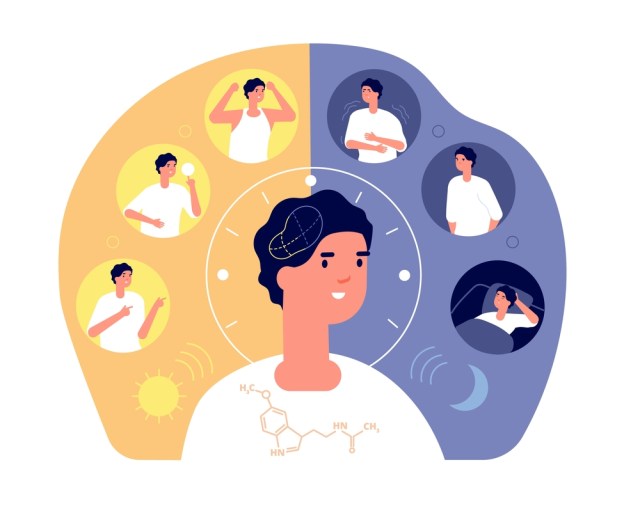
The circadian system orchestrates daily physiological rhythms, including sleep-wake cycles and the secretion of hormones. Disruptions in these rhythms have long been associated with the pathophysiology of mood-related disorders. Exposure to bright light during specific circadian phases can alter melatonin secretion and sleep architecture, thought to be a cause of mood dysregulation. Abnormal sensitivity to light may exacerbate circadian shifts. This sensitivity is amplified during seasonal changes such as spring and summer, when the intensity and duration of daylight increase. Circadian phase-specific interventions must be tailored to each individual’s mood phase and biological sensitivity.
Course Format
Homestudy
Course Syllabus
- Introduction: The Therapy Challenge
- Light as a Circadian Modulator
- Light at Night (LAN) and the Risk of Mania
- Seasonality and Mood Disorders
- Bright Light Therapy (BLT) and Manic Switching
- Mechanisms: Melatonin, Sleep Disruption, and Neural Pathways
- Personalized Therapy for Patients with Genetic and Chronotype Vulnerabilities
- Clinical Implications and Future Directions
- Takeaway Points for Clinicians and Therapists
Authors
Susan Depasquale, MA, MSN, PMHNP-BC
Susan DePasquale is a board certified Psychiatric Mental Health Nurse Practitioner. Her current practice is with families, youth and adults who have mental illnesses in both inpatient and outpatient settings, including telepsychiatry for Montana, Washington and Wisconsin communities. She completed her Masters of Art in Political Science at the University of Victoria, British Columbia, Masters of Science in Nursing at Seattle Pacific University in Seattle, Washington with a focus in neurogastroenterology and the Post-Masters of Science in Nursing at the Montana State University in Bozeman, Montana with a focus in psychiatry. She has worked with small and rural healthcare teams in British Columbia and the Northwest Territories, Canada, and in teaching and research hospitals such as Providence Health and Virginia Mason Medical Center Digestive and Liver Disease Departments in Seattle. Since 2012, she has been actively involved in online continuing education program development for nurses and health teams.
William Cook, PhD
William Cook, Ph.D. is a licensed psychologist who worked for 15 years in private practice in Montana before leaving his practice to work full time as the Director of CE4Less. He earned his doctorate degree from Texas A&M University, and focused much of his psychology practice in the area of child and family counseling, as well as psychological testing. Dr. Cook likes new challenges, foreign traveling to Africa and areas of Europe and the near East, scuba diving, running, music, and spending time with his family.