
Course Summary
Expiration Date: 02/17/2029
Hair loss is a common condition with diverse causes, including genetic, hormonal, autoimmune, mechanical, and medication-related factors. Common non-scarring types include androgenetic alopecia, telogen effluvium, alopecia areata, traction alopecia, and anagen effluvium, while scarring alopecias involve irreversible follicular loss. Accurate classification and early recognition are essential to guide treatment and prognosis. Evidence-based therapies span pharmacologic options, procedural interventions, and emerging regenerative approaches. A clear understanding of underlying mechanisms, timely intervention, and realistic goal setting can help preserve hair, improve outcomes, and reduce psychosocial burden.
Course Format
Homestudy
Course Syllabus
- Introduction
- Epidemiology and Clinical Significance of Androgenetic Alopecia
- Classification of Hair Loss
- Non-Scarring vs Scarring Alopecias
- Androgenetic Alopecia (AGA)
- Telogen Effluvium
- Alopecia Areata
- Traction Alopecia and Anagen Effluvium
- Overlap and Mixed Causes
- Medication-Induced Hair Loss
- Focus on Androgenetic Alopecia
- History and Clinical Presentation
- Onset & Progression
- Family History & Associated Symptoms
- Physical Examination
- Trichoscopy / Dermoscopy
- Laboratory and Adjunct Investigations
- Severity Scoring
- Decision-Making and Treatment Planning
- Pharmacologic Foundations of Androgenetic Alopecia Treatment
- Topical Minoxidil
- Oral Finasteride (Men)
- Topical Finasteride
- Oral Dutasteride
- Spironolactone (Topical or Oral, Primarily Women)
- Botulinum Toxin (Experimental)
- Current First-line Strategy and Guideline Summary
- Adjunctive and Regenerative Treatment Strategies
- Low-Level Laser Therapy (LLLT)
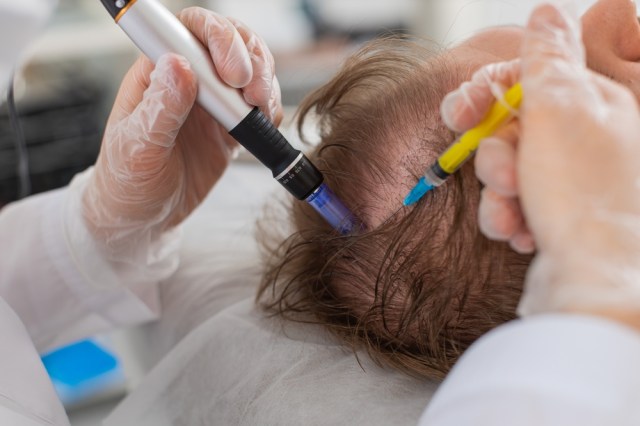
- Microneedling
- Platelet-Rich Plasma (PRP)
- Combination Therapies
- Stem Cell and Regenerative Therapies
- Supplements and Nutritional Adjuncts
- JOURNAL CLUB: PHOTOTHERAPY AND LASER-BASED INTERVENTIONS FOR HAIR LOSS
- Background
- Methods
- Results
- Key Clinical Takeaways by Alopecia Subtype
- Summary
Authors
Richard Daniels, PharmD, BCPS
Richard “Cole” Daniels earned his Doctor of Pharmacy(PharmD) from the Skaggs School of Pharmacy at the University of Montana in 2018. Throughout pharmacy school he completed a 3-year internship at Community Medical Center in Missoula, Montana in which he gained valuable experience in an acute care setting. Cole currently serves as a psychiatric clinical staff pharmacist at the Montana State Hospital. He has over 11 years of pharmacy experience having worked in several settings including retail, acute care, and inpatient psychiatric care. Cole has a diverse set of interests. However, acute care medicine, infectious disease, pain management, and asthma/COPD are a primary focus of his at the Montana State Hospital. He obtained board certification as a certified pharmacotherapy specialist in the Spring of 2022.
Elisabeth Gordon, BScPharm, RPh
Elisabeth Gordon earned her BSc(Pharm) from the University of British Columbia in 2004. After graduation, she worked in community retail pharmacies on Vancouver Island, before returning to her rural hometown of Salmon Arm. In 2016 and 2017, Elisabeth trained with Pallium Canada and Victoria Hospice to enhance her knowledge of end-of-life-care and palliative services. She is a volunteer medical supervisor for T1DOutreach, a peer support platform for adults living with type 1 diabetes, and a member of a Canadian peer support group for adults living with Birdshot Uveitis. Elisabeth enjoys working in a small, fast-paced rural pharmacy where she brings compassion and empathy to her everyday practice.