Course Summary
Expiration Date: 05/25/2029
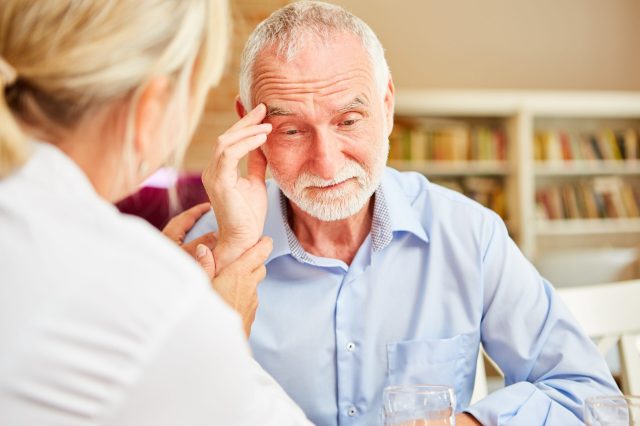
The rising elderly population in North America demands a critical focus on long-term care and end-of-life issues. Elderly persons with a diagnosis of dementia present complex challenges due to co-occurring mental health concerns, such as depression, increasing their morbidity and mortality. People with dementia are particularly vulnerable to hidden abuse, often committed by family members at home. Elder abuse is an underreported legal and social concern due to fear of retaliation by perpetrators. Managing end-of-life transitions for elderly persons with dementia requires an interprofessional health team that can work with facility and/or home support staff and family caregivers.
Course Format
Homestudy
Course Syllabus
- Introduction
- Memory Disorders in the Elderly
- Alzheimer’s Disease and Other Dementias
- Long-Term Care Services
- Home Care, Adult Daycare, and Long-term Care
- Alzheimer’s Special Care Units and Memory Care
- Depression in the Elderly
- Suicide Prevention
- Symptoms of Geriatric Depression
- Treatment: Antidepressants and Augmentation Strategies
- Elder Abuse: Health, Social, and Economic Concerns
- A Hidden Social Problem
- Risk Factors
- Under-reporting of Elder Abuse
- Physical, Psychological, Sexual, and Deprivation
- Neglect and Abandonment
- Rights, Self-neglect, Institutional, Social Media
- Warning Signs of Elder Abuse
- Risk Factors and Health Consequences of Elder Abuse
- Elder Abuse Prevention and Reporting
- End-of-Life Care
- Interprofessional Health Team Role
- Ethical Issues
- Hospice and Palliative Care
- Transitioning to Palliative Care
- Diverse Cultural and Spiritual Care Needs
- Advance Directives: Communication and Engagement
- Informed Consent and Decision-Making Capacity
- Euthanasia and Physician-Assisted Suicide
- Alzheimer’s Disease Updated Criteria and Case Study
- Case Study: Cognitive Decline in a 37-Year-Old Male
- Summary
Author
Marilyn Lajoie, MD, DC, CCSP
Dr. Marilyn Lajoie obtained her medical degree from Saba University School of Medicine in 1999, Her residency began with one year of Anatomical and Surgical Pathology at Orlando Regional Medical Center, before transferring within the same post-graduate residency program to Internal Medicine. Upon completion of residency, she went into private practice in Orlando, where she specialized in Internal Medicine, Sports Medicine and Rehab, as well as acute and chronic pain management. Before becoming a medical doctor, she had practiced as a Chiropractic Physician, graduating from New York Chiropractic College in 1980, practicing initially on Long Island, N.Y., before moving to Florida where she had a successful chiropractic practice and physical rehabilitation center, and gained recognition as a Certified Chiropractic Sports Physician. Dr. Lajoie was also the Director of Physical Therapy at Horizon Hospital, a residential and outpatient psychiatric hospital, and later, continued in the same capacity at Horizon’s sister psychiatric hospital in Brooksville, Florida. Dr. Lajoie maintained her chiropractic license and continued to practice both Internal Medicine and Chiropractic throughout private practice, until moving to the Veterans Healthcare System in 2014. Continuing in both fields, she became the Deputy Chief of Staff for the Montana VA, where she completed her service in 2021. Dr. Lajoie now works predominantly in telemedicine, and in an Expert Witness capacity for both medical and chiropractic cases. Still living in Montana, she enjoys being able to treat not only the rural areas of the state through this technology, but also patients across the US where she maintains multiple active state licenses. She and her husband also own a llama ranch with over thirty llamas that are hand selected for rare genetics. At the llama ranch, the public is invited to come and visit to learn about these elegant creatures, and to see ranch life firsthand – llama style! Dr. Lajoie and her husband have six adult children, as well as seven dogs.